
How Resort-Style Living Improves Mental Well-Being and Everyday Happiness
There’s a moment a lot of people describe the same way, even if they’ve never met each other:
stepping off a busy road, past a gate, into a residential community that actually has trees, open
sky, and quiet — and feeling something in their shoulders let go. That’s not just a nice
sensation. It’s your nervous system responding to an resort-style living environment, and there’s a growing body
of research backing up why it matters more than we usually give it credit for.
Your Home Environment Isn’t Neutral
We tend to think of a home as a backdrop — the place where life happens, not something that
shapes how life feels. But environmental psychologists have been pushing back on that idea for
years, and the evidence keeps landing in the same place: where you live actively influences
how you feel, not just where you feel it.
Studies on green space exposure have consistently linked access to nature — even just a view
of trees from a window — with better life satisfaction and lower reported stress. One well-known
line of research found that residential green space in childhood carries forward into adult mental
wellbeing years later, shaping how connected people feel to nature and how they cope with
stress as grown adults.
Why “Resort-Style” Isn’t Just a Marketing Phrase
When developers describe a project as resort-style, it’s easy to roll your eyes and assume it’s
just a fancier way of saying “there’s a pool.” But the actual design principles behind resort-style
living map surprisingly well onto what the wellbeing research points to.
Resorts are built, deliberately, around a few consistent ideas: lower density than a typical
building, generous green and open space, water features, walking paths that don’t dead-end
into a parking lot, and architecture that gives you somewhere pleasant to simply be outside your
own four walls. None of that is decorative flourish — it’s the built-environment version of the
conditions researchers associate with reduced stress and improved mood. A resort doesn’t feel
calming by accident; those same design choices work just as well built into where you live every
day, not just where you vacation once a year.
The Difference Between Visiting Calm and Living In It
Here’s the part that gets missed in most conversations about wellness and housing: a five-day
resort stay is nice, but you go home to the same stressors afterward — the same commute, the
same cramped balcony, the same lack of anywhere pleasant to just sit outside. The benefit
resets almost as fast as it arrived.
Resort-style residential living works differently because it’s not a break from your environment
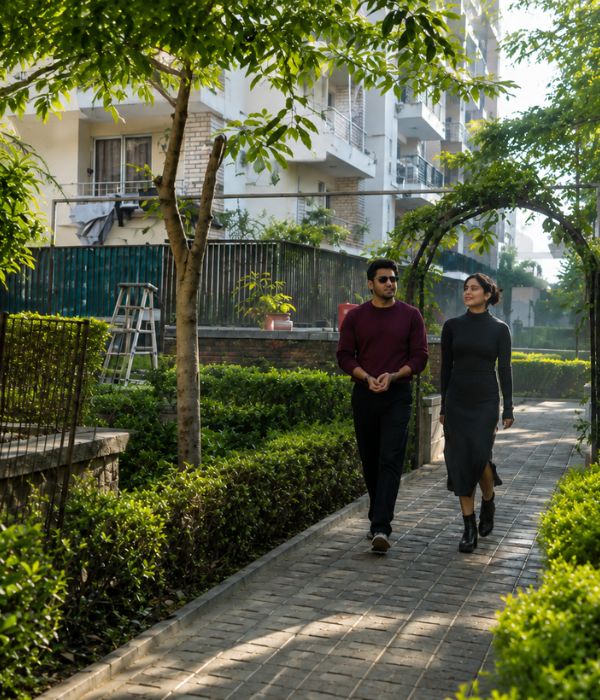
— it becomes your environment. The walking path isn’t something you use once on holiday; it’s
the one you pass every morning on your way to work. The green courtyard isn’t a photo
opportunity; it’s where your kids actually play after school. Researchers studying green space
and mental wellbeing have repeatedly pointed out that consistency of access matters —
occasional exposure to nature helps, but regular, daily access is what actually shows up in
long-term wellbeing outcomes. That’s the entire logic behind building resort-style principles into
permanent homes instead of leaving them to a once-a-year getaway.
Small, Repeated Moments Add Up
Nobody’s mental health improves because of one dramatic change. It improves through
repetition — the same small good thing happening often enough that it becomes the baseline
instead of the exception. A short walk through green space before work. A quiet ten minutes on
a bench that doesn’t face a wall. Kids playing outside within sight of home instead of stuck
indoors because there’s nowhere safe to go.
Research on outdoor physical activity has found associations between time spent in green
spaces and measurable improvements in reported happiness and lower anxiety, and the effect
tends to strengthen with regularity rather than one-off exposure. Resort-style communities are
essentially designed to manufacture those small repeated moments as a default part of daily
life, rather than something residents have to seek out elsewhere.
What This Looks Like in Practice
This is really the argument for choosing a home environment deliberately rather than treating it
as an afterthought once location and price are settled. A project that reserves real space for
greenery, keeps density low enough that residents aren’t stacked on top of each other, and
builds in genuine walking and gathering spaces isn’t just offering a nicer lifestyle — it’s offering a
measurably different baseline for everyday mental wellbeing.
Addela Palm Resort in Raj Nagar Extension is built around exactly this idea — resort-inspired
open spaces, low-density planning, and landscaped surroundings designed to be part of daily
routine rather than a weekend indulgence. For anyone weighing how much a living environment
actually affects day-to-day mood and stress .
The Takeaway
Calm isn’t something you have to travel for. The research is fairly consistent on this point: an
environment with real green space, room to breathe, and places designed for people rather than
just traffic flow measurably supports better mood and lower stress over time. Resort-style living
simply takes that insight and makes it permanent, instead of something you rediscover once a
year and then leave behind at checkout.