

What Makes Raj Nagar Extension an Emerging Lifestyle Destination in Ghaziabad?
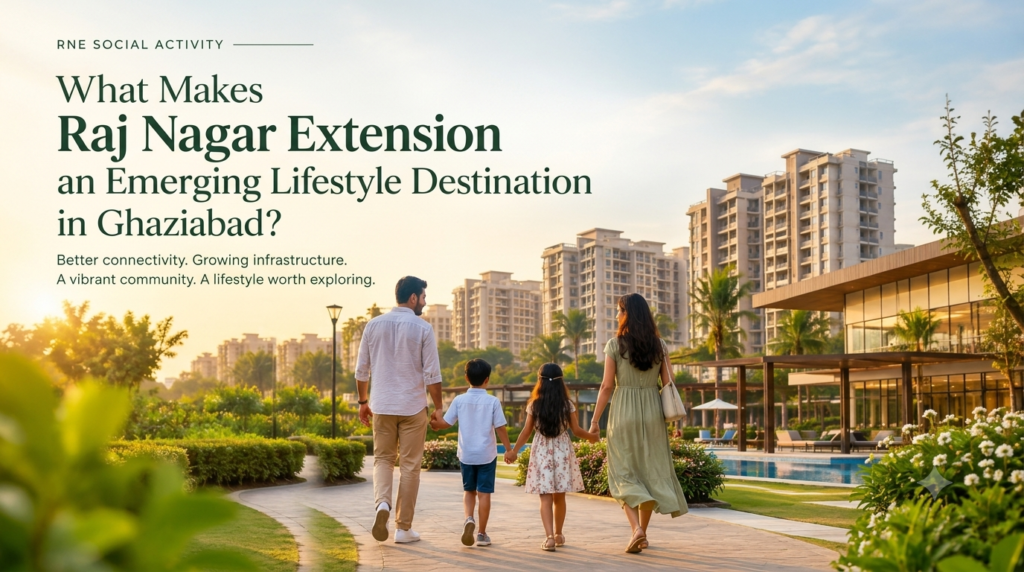
What Makes Raj Nagar Extension an Emerging Lifestyle Destination in Ghaziabad? The way people choose a home is changing. Today, homebuyers are looking beyond the four walls of an apartment and considering the larger lifestyle offered by the location—connectivity, social infrastructure, green spaces, residential communities, everyday conveniences and opportunities for family life. In this changing residential landscape, Raj Nagar Extension in Ghaziabad has emerged as an area attracting attention from families and homebuyers looking for a well-connected and evolving residential destination. With expanding residential development and lifestyle-oriented communities, the area is increasingly becoming relevant for people exploring residential projects in Raj Nagar Extension. Why Is Raj Nagar Extension Gaining Residential Attention? Raj Nagar Extension has experienced significant residential development over the years. The availability of modern housing options, planned residential communities and access to everyday conveniences has contributed to its growing appeal. For many homebuyers, the attraction lies in the possibility of combining contemporary residential living with the advantages of an established city such as Ghaziabad. The area offers a mix of residential projects catering to different requirements, while its continued development is contributing to a changing neighbourhood experience. Lifestyle Beyond the Home A modern residential destination is not defined only by the homes available there. The surrounding lifestyle also plays an important role. Residents today look for spaces where they can spend time with family, enjoy outdoor areas, participate in community activities and access daily conveniences without travelling long distances for everything. This is one reason lifestyle in Raj Nagar Extension is becoming an important consideration for prospective homebuyers. Community events, recreational opportunities, local businesses and evolving social infrastructure can collectively contribute to a more engaging residential environment. For families researching things to do in Raj Nagar Extension, the growing residential ecosystem also means more opportunities to explore local leisure, dining, shopping and community activities. Green Spaces and Community Living Greenery has become an increasingly important factor in residential decision-making. Families often look for homes that offer a balance between urban convenience and access to landscaped or open spaces. The growing presence of green residential communities in Raj Nagar Extension reflects this changing expectation. For families, open and landscaped areas can provide space for morning walks, children’s activities, relaxation and social interaction. Community spaces can also encourage residents to connect with their neighbours and participate in celebrations and social activities. This combination of residential comfort and community interaction is an important part of a modern residential lifestyle. The Growing Appeal of Resort-Style Living Another noticeable shift in residential preferences is the growing interest in resort-style living. Homebuyers increasingly seek residences that offer more than an apartment—they look for an environment that feels comfortable, spacious and lifestyle-oriented. This concept combines elements such as landscaped surroundings, lifestyle amenities, open spaces and recreational areas with the privacy of a residential home. For families considering a luxury residential society in Ghaziabad, these lifestyle features can play an important role in evaluating a project. Addela Palm Resort: A Lifestyle-Oriented Residential Experience Within the evolving residential landscape of Raj Nagar Extension, Addela Palm Resort is positioned around the idea of combining spacious residences with a resort-inspired lifestyle. The project offers 3 & 4 BHK in Raj Nagar Extension, designed for families looking for generous living spaces and a contemporary residential environment. Its focus on greenery, open spaces and lifestyle-oriented features aligns with the growing preference for residential communities that offer more than just an apartment. The Addela Palm Resort amenities further contribute to the overall project experience by providing spaces intended to support relaxation, recreation and community living. What Homebuyers Can Look for When Comparing Projects With several residential projects in Raj Nagar Extension, prospective buyers should look beyond promotional claims and evaluate the complete project experience. Some useful factors to consider include: Location and accessibility Quality and planning of the residential development Available amenities and open spaces Construction progress and project updates Quality of common areas Community environment Everyday convenience and nearby social infrastructure Feedback and experiences of existing customers, where available Looking at these factors can help homebuyers develop a more complete understanding of a project before making a decision. Construction Progress and Project Transparency Construction progress is another important consideration for property buyers. Regular Addela Palm Resort construction updates can help prospective buyers understand the development stage and follow the project’s progress over time. For a homebuyer, transparency around project development can form an important part of the overall project experience. It also helps buyers understand how the planned residential environment is taking shape. A Location Shaped by Changing Lifestyle Expectations The evolution of Raj Nagar Extension reflects a larger shift in the way people approach residential living. Homebuyers are increasingly interested in locations that can support their lifestyle—not simply provide an address. The combination of residential development, evolving infrastructure, community spaces and lifestyle opportunities is contributing to the area’s growing residential appeal. For families looking at luxury family living, the opportunity to combine spacious homes with green surroundings and community-oriented amenities can be an important consideration. Customer Experiences and the Homebuyer Journey Every residential project is ultimately experienced by the people who live there. Customer experiences, testimonials and homebuyer journeys can provide useful perspectives on aspects that may not be immediately visible through brochures or advertisements. Prospective buyers can consider feedback related to the overall living environment, amenities, community interaction, accessibility and day-to-day experience. Such real-world perspectives can complement the formal information provided by a developer and help buyers conduct more informed research. Why Raj Nagar Extension Is Becoming a Lifestyle-Focused Residential Destination Raj Nagar Extension’s changing residential landscape demonstrates how Ghaziabad’s housing preferences are evolving. The area is increasingly associated with modern residential developments, community living, green spaces and lifestyle-oriented amenities. As more residential and social infrastructure develops, the neighbourhood continues to attract attention from people seeking a contemporary urban lifestyle. For those considering 3 & 4 BHK in Raj Nagar Extension, projects such as Addela Palm Resort represent the growing emphasis on spacious homes and lifestyle-led community living.
Janmashtami Celebration at Addela Palm Resort: Building Community Bonds
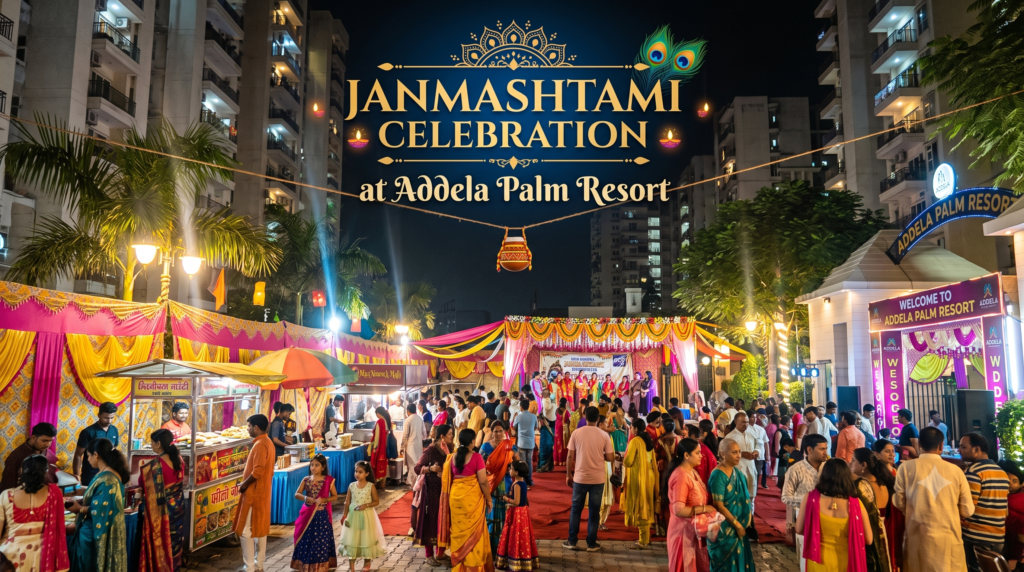
Janmashtami Celebration at Addela Palm Resort: Building Community Bonds Festivals have a way of drawing people together and Janmashtami Celebration at Addela Palm Resort, situated in Raj Nagar Extension, Ghaziabad. At Addela Palm Resort, Krishna Janmashtami is more than just a festival; it’s a chance to bring the entire community together, from families to neighbours, and friends alike to celebrate the birth of Lord Krishna in style. Addela Palm Resort creates a lifestyle-oriented residential community that offers residents a chance to live in modern 3 & 4 BHK residences amidst greens, and enjoy the ease of living with its many lifestyle amenities. Experiencing the Festival Spirit at Addela Palm Resort Krishna Janmashtami is a festival that celebrates the birth of Lord Krishna and is known as the festival of joy, togetherness, and new beginnings. At Addela Palm Resort, Janashtami gives the residents the chance to enjoy their celebrations of the beloved deity with their families, friends, and even the entire community. From decorations in the community to engaging activities, the residents can enjoy this festival of joy and togetherness with the entire community. Whether it’s kids playing their part in the festivities or even families enjoying a meal together, the entire community is a great place to celebrate the festival. For residents looking for a community that fosters bonds between families, neighbours, and even friends, a Janmashtami at Addela Palm Resort will definitely be an experience to look forward to. Enjoying Community Events with your Family Many community events bring in multiple generations of a family together, with parents and children enjoying the festivity and senior citizens enjoying the community vibe. Events like Janmashtami open a whole new world of community living for the residents, with the chance to enjoy the community beyond their homes. The greenery and community vibe of Addela Palm Resort give it the perfect ambience needed to experience a festival of Janmashtami. While the interiors of the home are important, a home also needs to be a place where families can enjoy time together with their loved ones. Festive days and community events like Janmashtami bring in that perfect blend needed for a luxury family living experience. Looking for More Than Just an Interior-Luxury Home? As the need for a home keeps growing, so does the need to look beyond the interiors of the home. Homebuyers now look to find a complete lifestyle along with their home, which is where the Addela Palm Resort lifestyle amenities and community come into play. A well-planned residential community not only gives the residents a place to stay but also gives them the chance to celebrate festivals with their loved ones, engage in community events, and much more. From regular chats with the neighbour to enjoying festivals like Janmashtami with them, a community event can be the perfect place to gain a sense of belonging for families. For those searching for 3 & 4 BHK in Raj Nagar Extension, Addela Palm Resort gives a family a chance to enjoy their home and community in a new light. The Need for Community Life in Raj Nagar Extension Raj Nagar Extension has grown to become a prime residential destination in Ghaziabad, with homebuyers seeking a mix of residential communities and lifestyle amenities. Apart from a home, residents also value a community where they can enjoy more than just the interiors of their home. Community events, recreation areas, and events like Janmashtami can give residents a chance to enjoy life on a whole new level. For those searching for things to do in Raj Nagar Extension, community events like Janmashtami in residential societies can also give families the chance to meet new people, experience new cultures, and enjoy time with the family closer to home. As the popularity of residential communities in Raj Nagar Extension grows, so does the appeal of a fully planned residential community that offers a blend of residences, lifestyle amenities, and community events. Resort Style Living and Community Life at Addela Palm Resort Resort style living is all about creating an ambience of resorts within a residential community, creating a more comfortable and luxurious lifestyle for the residents of the community. At Addela Palm Resort, the mix of greenery, lifestyle amenities, and spacious 3 & 4 BHK residences gives the community a chance to bring together the comfort of a home with the community events of a resort. A festival like Janmashtami brings together families who can enjoy the comforts of their home while also engaging with their community. It’s this blend of community and family life that makes a residential society more than just a home. Creating Memorable Experiences Festivals are synonymous with experiences. Whether it’s a child participating in a festival activity or family members gelling together as a unit, every experience at a festival can become a cherished memory. From taking pictures with family members at a festival to chatting with the neighbour or simply enjoying the festivity and decorated ambience of Janmashtami, these can all be memorable experiences for a homebuyer. These experiences can shape a homebuyer’s journey towards buying not only a home but a lifestyle. For homebuyers looking to experience a community life, seeing the experiences of the residents can be a great way to find a residential community that fits their lifestyle needs. A Lifestyle Made for Families Addela Palm Resort offers families the chance to enjoy their lives in a community filled with spacious 3 & 4 BHK residences in Raj Nagar Extension, lifestyle amenities, and community events. For those searching for a luxury residential society in Ghaziabad, the blend of lifestyle offered by Addela Palm Resort can be a great choice. Festivals like Janmashtami are a prime example of how a home can create experiences for a family. The celebration is all about the experiences and memories created by families in the home. While many people see a home to be a place where families live, a great home creates memories for the family. Experiences That Bring a Community Together For the residents of Addela Palm Resort, the Janmashtami celebration was all about bringing families and the entire community together. As the residential community grows, events like Janmashtami can become a part of the community’s memories. For homebuyers exploring a luxury residential society in Ghaziabad, Addela Palm Resort can be the perfect place to enjoy a lifestyle filled with spacious homes, community events, lifestyle amenities, and greenery. For a great home is also a place where life happens. Explore the Lifestyle of Addela Palm Resort Raj Nagar Extension, Ghaziabad +91 9871670760 www.addelapalmresort.com Enjoy the lifestyle of a residential community that brings together 3 & 4 BHK residences in a resort style ambience.
How Resort-Style Living Improves Mental Well-Being and Everyday Happiness
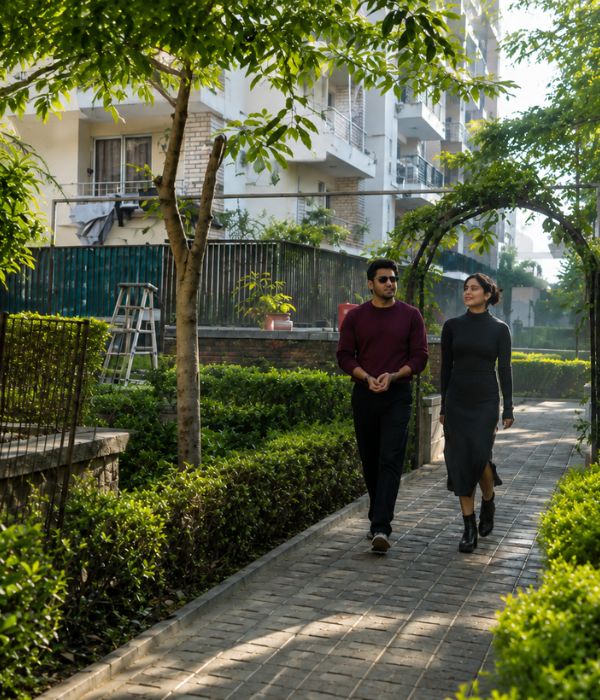
How Resort-Style Living Improves Mental Well-Being and Everyday Happiness There’s a moment a lot of people describe the same way, even if they’ve never met each other:stepping off a busy road, past a gate, into a residential community that actually has trees, opensky, and quiet — and feeling something in their shoulders let go. That’s not just a nicesensation. It’s your nervous system responding to an resort-style living environment, and there’s a growing bodyof research backing up why it matters more than we usually give it credit for. Your Home Environment Isn’t Neutral We tend to think of a home as a backdrop — the place where life happens, not something thatshapes how life feels. But environmental psychologists have been pushing back on that idea foryears, and the evidence keeps landing in the same place: where you live actively influenceshow you feel, not just where you feel it. Studies on green space exposure have consistently linked access to nature — even just a viewof trees from a window — with better life satisfaction and lower reported stress. One well-knownline of research found that residential green space in childhood carries forward into adult mentalwellbeing years later, shaping how connected people feel to nature and how they cope withstress as grown adults. Why “Resort-Style” Isn’t Just a Marketing Phrase When developers describe a project as resort-style, it’s easy to roll your eyes and assume it’sjust a fancier way of saying “there’s a pool.” But the actual design principles behind resort-styleliving map surprisingly well onto what the wellbeing research points to. Resorts are built, deliberately, around a few consistent ideas: lower density than a typicalbuilding, generous green and open space, water features, walking paths that don’t dead-endinto a parking lot, and architecture that gives you somewhere pleasant to simply be outside yourown four walls. None of that is decorative flourish — it’s the built-environment version of theconditions researchers associate with reduced stress and improved mood. A resort doesn’t feelcalming by accident; those same design choices work just as well built into where you live everyday, not just where you vacation once a year. The Difference Between Visiting Calm and Living In It Here’s the part that gets missed in most conversations about wellness and housing: a five-dayresort stay is nice, but you go home to the same stressors afterward — the same commute, thesame cramped balcony, the same lack of anywhere pleasant to just sit outside. The benefitresets almost as fast as it arrived. Resort-style residential living works differently because it’s not a break from your environment— it becomes your environment. The walking path isn’t something you use once on holiday; it’sthe one you pass every morning on your way to work. The green courtyard isn’t a photoopportunity; it’s where your kids actually play after school. Researchers studying green spaceand mental wellbeing have repeatedly pointed out that consistency of access matters —occasional exposure to nature helps, but regular, daily access is what actually shows up inlong-term wellbeing outcomes. That’s the entire logic behind building resort-style principles intopermanent homes instead of leaving them to a once-a-year getaway. Small, Repeated Moments Add Up Nobody’s mental health improves because of one dramatic change. It improves throughrepetition — the same small good thing happening often enough that it becomes the baselineinstead of the exception. A short walk through green space before work. A quiet ten minutes ona bench that doesn’t face a wall. Kids playing outside within sight of home instead of stuckindoors because there’s nowhere safe to go. Research on outdoor physical activity has found associations between time spent in greenspaces and measurable improvements in reported happiness and lower anxiety, and the effecttends to strengthen with regularity rather than one-off exposure. Resort-style communities areessentially designed to manufacture those small repeated moments as a default part of dailylife, rather than something residents have to seek out elsewhere. What This Looks Like in Practice This is really the argument for choosing a home environment deliberately rather than treating itas an afterthought once location and price are settled. A project that reserves real space forgreenery, keeps density low enough that residents aren’t stacked on top of each other, andbuilds in genuine walking and gathering spaces isn’t just offering a nicer lifestyle — it’s offering ameasurably different baseline for everyday mental wellbeing. Addela Palm Resort in Raj Nagar Extension is built around exactly this idea — resort-inspiredopen spaces, low-density planning, and landscaped surroundings designed to be part of dailyroutine rather than a weekend indulgence. For anyone weighing how much a living environmentactually affects day-to-day mood and stress . The Takeaway Calm isn’t something you have to travel for. The research is fairly consistent on this point: anenvironment with real green space, room to breathe, and places designed for people rather thanjust traffic flow measurably supports better mood and lower stress over time. Resort-style livingsimply takes that insight and makes it permanent, instead of something you rediscover once ayear and then leave behind at checkout.
What Defines True Luxury Living in Modern Residential Communities?
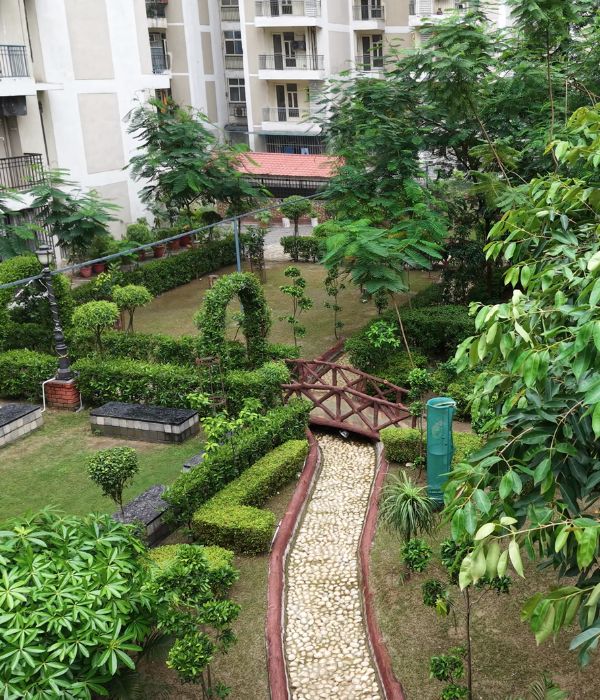
What Defines True Luxury Living in Modern Residential Communities? Ask someone what true luxury living housing meant a decade ago and you’d get a fairly predictableanswer: marble floors, a chandelier in the lobby, maybe a fountain out front. Ask the samequestion today and the answer looks almost nothing like that. Somewhere in the last few years,the whole definition quietly flipped — and honestly, it’s about time. It Stopped Being About What You Can See The old model of true luxury living was built around visible excess — bigger foyers, shinier finishes, moregold trim than any building needed. It photographed well in brochures, which was probably thepoint. What’s replaced it is harder to put on a poster. Today’s buyers ask questions that have nothingto do with how a lobby looks in a render. How well does the building breathe? Does the layoutget real cross-ventilation, or just claim to? Will the materials still look good after ten monsoons,or only on move-in day? Design that lasts has quietly become more desirable than design thatdazzles. Privacy Is the New Status Symbol Here’s something that would’ve sounded strange a few years back the biggest flex in luxuryhousing right now isn’t square footage, it’s not sharing a wall with anyone. Buyers who canafford to be picky are steering away from towers packed with hundreds of units stacked on topof each other. They want lobbies that feel personal, not like a hotel check-in counter, andbalconies that don’t look straight into a neighbor’s living room. For years, density was treated as unavoidable in Indian cities — you accepted the crowdbecause that’s just how apartment living worked. Now, low-density true luxury living has become one of theclearest markers separating a real luxury project from one just borrowing the label. Fewer unitsper floor, fewer families per acre, more distance between your front door and everyone else’s. Wellness Moved From the Brochure Into the Blueprint Every project used to list a gym and a pool and call it done. That box-ticking approach doesn’tcut it anymore. Wellness has stopped being an amenity and started being a design principle. It shows up in things you wouldn’t have thought to ask about before: how much daylight actuallyreaches a unit, whether the acoustic insulation is good enough that you can’t hear yourneighbor’s TV, whether walking paths and green lawns are placed so people actually use theminstead of just admiring them from a balcony. The pandemic pushed a lot of this into focus —people spent months inside their own four walls and suddenly noticed, painfully, whether theirhome actually supported their wellbeing or just housed them. That memory hasn’t faded. Community, Genuinely Built, Not Just Advertised There’s a difference between a project that has a clubhouse and a project that has a community,and buyers have gotten sharp about telling the two apart. A clubhouse is a room with equipmentin it. A true luxury living community is what happens when a place’s layout actually encourages people to run intoeach other — kids cycling to a friend’s block without crossing a highway, a jogging track peopleuse at seven in the morning, a lawn where someone’s grandparents can sit without needing toplan it as an outing. That’s harder to build than a gym, and it can’t be faked with brochure language. It comes fromhow a project is planned from the ground up — how much open space gets reserved instead ofbuilt over, and whether shared spaces feel like an afterthought or the actual point of the design. Smart, But Invisible The last piece is technology, and it’s worth mentioning mostly because of how the expectationaround it has changed. Buyers aren’t impressed by gadgets anymore — everyone’s already gota smart speaker and a video doorbell at home. What they want now is automation thatdisappears into daily life: security that just works, climate control that doesn’t need constantfiddling, EV charging that’s simply there when you need it rather than a special request. Thetech that matters most is the tech you stop noticing. Where This Leaves Buyers Put all of that together and the real test for “true luxury living” gets a lot simpler to apply, even if it’sharder to fake: does the place breathe well, does it give you actual privacy, does it treatwellness as structural rather than decorative, and does the community feel designed rather thanassembled. Addela Palm Resort in Raj Nagar Extension leans into several of these ideasdirectly — a low-density layout by design rather than by accident, generous open spacesbetween blocks, and a planning approach that prioritizes how residents will actually live day today over how the project photographs on launch day. The Real Shift None of this means true luxury living got smaller or less impressive — it just stopped performing for anaudience and started actually serving the people living inside it. That’s probably the most honestdefinition available right now: true luxury isn’t what a home shows you when you walk in. It’show it makes you feel a year later, once the excitement’s worn off and it’s just your everyday life.
The Future Growth Story of Ghaziabad Real Estate and What It Means for Investors

The Future Growth Story of Ghaziabad Real Estate and What It Means for Investors There’s a stat that gets thrown around a lot in Ghaziabad real estate circles these days, and it’sworth repeating because it actually stops people mid-sentence: property prices here haveclimbed over 130 percent in the last four years. Not projected. Not “expected to.” Alreadyhappened. For a city that spent decades being described as “Delhi’s quieter neighbor,” that’s nota small thing. The question investors are actually asking now isn’t whether Ghaziabad has grown — that part’ssettled. It’s whether there’s still room left, or whether the easy money already got made. What Actually Got Ghaziabad Here It’s tempting to credit one big project, but honestly it’s been a stack of them arriving closetogether. The Delhi-Meerut Expressway cut travel time to Delhi down to under 30 minutes onthe stretches it touches. The Delhi–Ghaziabad–Meerut RRTS, fully operational since early 2026,brought that down further for anyone near a station — under an hour end to end, at speedsmost Indian commuters have never experienced from a regional rail line. Luxury Residental Destination and metroconnectivity, while slower to expand, has kept extending its reach into the city’s residential belts. Put those together and you get a city that stopped being a compromise. People aren’t choosingGhaziabad because Delhi and Noida were too expensive anymore — plenty are choosing itbecause it now offers more space, similar connectivity, and a noticeably lower price tag. That’s avery different kind of demand than the old “priced out of Delhi” story, and it tends to be stickier. Is the Growth Slowing, or Just Maturing? Here’s where it gets more nuanced than the headline numbers suggest. Some recent trackingshows average asking prices in the city actually softening slightly — down from roughly 8,100rupees per square foot in late 2025 to around 7,600 by early 2026. That’s not a crash by anymeasure, but it is a signal worth paying attention to: the sharp, almost vertical growth phaseseems to be giving way to something steadier. For investors, that’s not necessarily bad news. A market that grows 130 percent in four yearsand then keeps growing at that pace isn’t sustainable — eventually it either corrects hard orsettles into something more durable. What Ghaziabad appears to be doing is the second one.Forecasts for 2026 mostly cluster around 6 to 10 percent growth citywide, with select premiumpockets running ahead of that. Slower, yes, but slower off a much higher, more established baseis a different risk profile than the early speculative years. Where the Growth Is Actually Concentrated Not every part of Ghaziabad is telling the same story, and this is where investor decisionsactually get made or lost. Indirapuram and Vaishali remain the established, ready-to-movechoices — safer, but with less room to run since their appreciation has largely alreadyhappened. Siddharth Vihar and the NH-24 belt are where a lot of the premium and luxurydevelopment is concentrated right now, and analysts keep naming them as likely to outperformthe citywide average over the next couple of years. Raj Nagar Extension sits in an interesting middle position. It’s benefited directly from both theexpressway and RRTS proximity, and it’s still priced meaningfully below Indirapuram andNH-24, even after its own recent gains. Areas near RRTS stations specifically have postedappreciation in the 30 to 60 percent range since the corridor’s rollout began, and Raj NagarExtension has been named repeatedly as one of the localities capturing that gain What This Means If You’re Actually Deciding Where to Put Money The honest takeaway for investors is that Ghaziabad as a whole is no longer an early-stage bet— that phase is behind it. But within the city, there are still pockets where the infrastructuredividend hasn’t fully caught up to the price. That’s the gap worth hunting for, rather thanassuming the whole city moves as one block. That’s also where project selection starts to matter more than it used to. Developer track record,RERA registration status, and actual construction progress separate real investment-gradeprojects from listings riding on the city’s reputation alone. Addela Palm Resort, located in RajNagar Extension, is one of the projects positioned in that still-appreciating pocket —RERA-registered, under active construction, and built around a lower-density format that’sbecoming more sought-after as buyer expectations in the area rise. The Bigger Picture Ghaziabad’s transformation from budget-housing belt to genuine NCR growth story is basicallycomplete — the debate now is about pace, not direction. For investors, that means thelow-hanging fruit is gone, but the market hasn’t plateaued either. It’s shifted from a speculativegrowth story to something closer to a fundamentals-driven one, which, if anything, makes it amore defensible long-term bet than it was five years ago — provided the entry point and theproject are chosen carefully.
Why Raj Nagar Extension is Becoming NCR’s Preferred Luxury Residential Destination
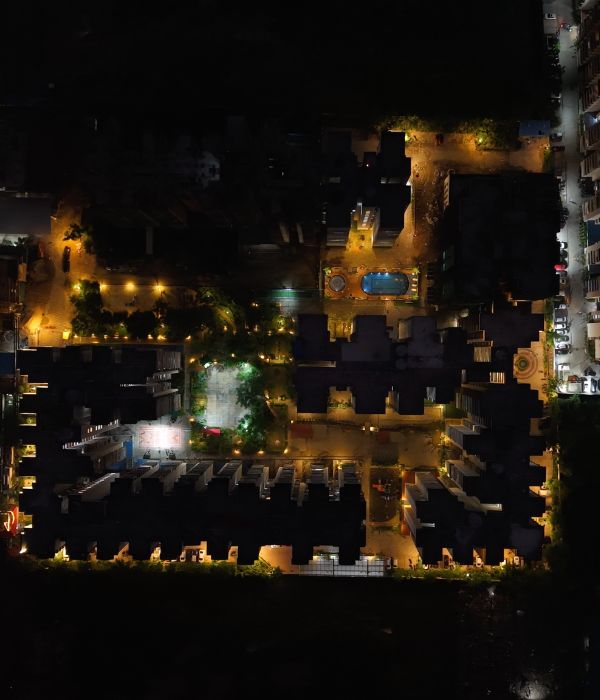
Why Raj Nagar Extension is Becoming NCR’s Preferred Luxury Residential Destination Ask anyone who’s tracked Ghaziabad real estate for a while and they’ll tell you the same thing:Raj Nagar Extension used to be the place you settled for. Not the dream address — thepractical one. So when “Luxury Residential Destination” starts showing up next to its name in project listings, it’s worthasking why. It’s not just marketing spin — something’s actually shifted here, quietly, over the lastcouple of years. The “Affordable = Basic” Assumption Is Breaking Down For the longest time, the area’s whole pitch was space per rupee — still cheaper thanIndirapuram, cheaper than Vaishali. But there used to be an unspoken rule attached to that:affordable meant basic. No clubhouse worth mentioning, no real landscaping, functional andforgettable. That rule doesn’t hold anymore. Drive through the area now and you’ll pass towers with actualclubhouses, landscaped courtyards, and sports courts — the kind of package that used to bereserved for pricier addresses. Builders who spent a decade putting up strictly no-frills housinghere are now launching projects with real amenity budgets behind them. Why Builders Suddenly Got Confident You don’t put luxury-grade money into a location on a whim. A few things had to change first. Luxury Residential Destination Connectivity’s the obvious one. Between the Delhi-Meerut Expressway, NH-58, the MeerutBypass, and RRTS stations now within reach, this stopped being a commute people dreaded.Once a commute stops being a problem, the price ceiling for a home there quietly moves uptoo. There’s also a supply-side signal worth noting. Gaurs, Ashiana, Migsun, Charms India —several established, reasonably risk-averse developers have all launched premium projectshere around the same window, with full clubhouses, pools, and interior specs unheard of in thisbelt five years back. When that many serious players make the same call independently, it’susually not a coincidence. The Buyers Changed Too — Nobody Talks About ThisEnough This is the bit that gets skipped in most write-ups, and I think it’s actually the more interestinghalf of the story. The people buying here in 2026 aren’t the same people who bought here in2015. Back then it was mostly first-timers, stretching every rupee to get a foothold in the NCR. Fine,understandable, that’s how most emerging localities start. But now there’s a real chunk ofdemand coming from a different group — people who already own something, usuallysomewhere older and more crowded in Ghaziabad or East Delhi, and who are looking to moveup. More space. Better build. Amenities that actually work, not just exist on a brochure. Andcrucially, they have the budget for it, provided the location makes sense on paper. That’s a fundamentally different buyer to design for. They don’t ask “what’s the cheapestper-square-foot rate here.” They ask about unit density, construction quality, whether the pool inthe render actually gets built. Builders responding to that pickier, better-funded buyer is a bigpart of why the word “luxury” has started sticking to this place. And the Price Data Backs It Up New listings in the area now run anywhere from the mid-4,000s to upward of 8,000 rupees persquare foot, depending on the project and what it’s offering — a spread wide enough togenuinely support a luxury segment, which wasn’t really the case a few years back when almosteverything sat bunched together at the budget end. Growth rates in some of the better sectorshave also been outpacing the city average, which tends to happen when perception of a placemoves faster than its price tag has caught up. So How Do You Actually Tell What’s Real? Fair question, because “luxury” gets slapped on a lot of listings that don’t really earn it. Myhonest advice: ignore the brochure language and look at what’s physically being built. Is itlow-density or just another crammed tower with a nicer lobby? Are unit sizes actually generous,or is “spacious 3 BHK” doing a lot of lying? Is construction visibly progressing, and is itRERA-registered, or is it still just a rendering and a sales office? Addela Palm Resort is one of the projects in Raj Nagar Extension that holds up reasonably wellagainst that test. It’s laid out low-rise and low-density rather than following the high-rise,high-unit-count model most of the area still leans on, with the design leaning toward privacy andopen space over squeezing in as many flats as possible per floor. It’s RERA-registered,construction is actively underway, and it’s positioned as one of the projects genuinely pushingthis shift rather than just borrowing the area’s new reputation. Bottom Line None of this happened because someone rebranded a locality overnight. It’s the slower, morebelievable version of the story — better roads and rail brought better buyers, better buyerspulled in better builders, and pricing is still catching up to all of it. Raj Nagar Extension is stillcheaper than the NCR’s established luxury addresses. That’s exactly why this particular windowis worth paying attention to, before it closes the way these things usually do.
Raj Nagar Extension vs Noida Extension: Which is Better for Homebuyers in 2026?

Raj Nagar Extension vs Noida Extension: Which is Better for Homebuyers in 2026? Every few months, someone in a family WhatsApp group asks the same question: Raj NagarExtension Vs Noida Extension? It’s one of the most recurring debates in NCR real estate circles,and honestly, there’s no universal right answer. What there is, though, is a clearer picture in2026 than there was even two or three years ago, now that both areas have had time to matureand their infrastructure promises have actually started showing up on the ground. Let’s go through it properly. The Price Gap Is Real, But It’s Narrowing Why Raj Nagar Extension has traditionally been the more affordable of the two, and that’s stillbroadly true. Average rates here have typically sat a few hundred rupees per square foot belowNoida Extension, which itself has occupied the mid-3,000s per square foot range in recentlistings. If pure entry price is your deciding factor, Raj Nagar Extension usually wins. But “usually” is doing some work in that sentence. Noida Extension’s pricing spans a muchwider band now — everything from budget 2 BHKs to premium high-rises with lifestyle amenities— which means the average number hides a lot of variation. Raj Nagar Extension, bycomparison, is still more consistently affordable across the board, but that also means fewerultra-premium options if that’s what you’re after. So the honest answer is: cheaper entry point inRNE, wider spread of choice in Noida Extension. Connectivity Has Changed the Whole Conversation This is where things have shifted the most since the old comparisons that used to circulateonline. Noida Extension’s traditional edge was its direct link to the Noida-Greater NoidaExpressway and its proximity to the IT corridors around Sector 62 and 63 — genuinely strongpoints for anyone working in that ecosystem. Raj Nagar Extension, though, has closed a lot of that gap. Between NH-58, the Meerut Bypass,the Delhi-Meerut Expressway, and now RRTS stations within reach, the area has stacked upmultiple connectivity layers in a short span of time. For someone who works in Delhi rather thanNoida specifically, Raj Nagar Extension arguably has the edge now, since it sits closer to centralDelhi and the Delhi-facing arterial roads. For someone anchored to Noida’s job market, NoidaExtension still makes more practical sense. It really comes down to where you actually work, notjust which area sounds more “connected” on paper. Planning and Feel of the Two Areas Noida Extension, officially Greater Noida West, was largely built as a planned township from theoutset — wide roads, organized sectors, and large integrated developments with in-builtamenities. It has a more uniform, master-planned character to it. Raj Nagar Extension grew a little more organically, which shows in a slightly more mixedstreetscape, but it also means a quieter, less densely packed environment overall in severalpockets. If you want the feel of a fully arrived, high-density township, Noida Extension leans thatway. If you’d rather have a calmer, more suburban pace without sacrificing access to the city,Raj Nagar Extension tends to fit better. Appreciation Potential Both areas have shown steady growth over the past several years, and neither is what you’dcall an early-stage bet anymore — both have already appreciated meaningfully off their originalbase prices. Noida Extension’s growth story is tied closely to continued IT-sector expansion andfuture metro extensions in that belt. Raj Nagar Extension’s growth is now riding on a genuinelydifferent trigger — the combination of the Delhi-Meerut Expressway and RRTS access, whichhas pulled it into a different conversation than it was part of five years ago. If you’re an investor trying to time an entry before the next leg of appreciation, the honest read isthat Raj Nagar Extension’s recent infrastructure additions are more recent and less fully pricedin than Noida Extension’s, which has had its expressway advantage baked into pricing forlonger. What This Means in Practice If your job and social life revolve around Noida or Greater Noida, established townships likeGaur City in Noida Extension remain a solid, well-tested option — large-format, amenity-richdevelopments that have already proven their build quality and delivery track record over multiplephases. If Delhi connectivity, a quieter setting, and getting in before the next price correction matter moreto you, Raj Nagar Extension deserves a serious look — and within it, projects positioned closestto the expressway and RRTS access are the ones worth prioritizing. Addela Palm Resort fitsthat description: it’s centrally placed within Raj Nagar Extension, RERA-registered, with activeconstruction, and designed around spacious 2, 3, and 4 BHK layouts aimed at familiesupgrading from older, more congested parts of the city rather than first-time budget buyers. The Real Answer There isn’t a single winner here, and anyone who tells you otherwise is probably sellingsomething in one of the two locations. Noida Extension offers a more finished, planned,IT-adjacent lifestyle at a slightly higher price point. Raj Nagar Extension offers a calmer setting,a lower entry cost, and a connectivity story that’s still unfolding rather than already priced in.Your job location, budget, and whether you’re buying to live or to invest should decide this one— not which name sounds more established.
The Psychology of Luxury Homes: Why Environment Influences Quality of Life
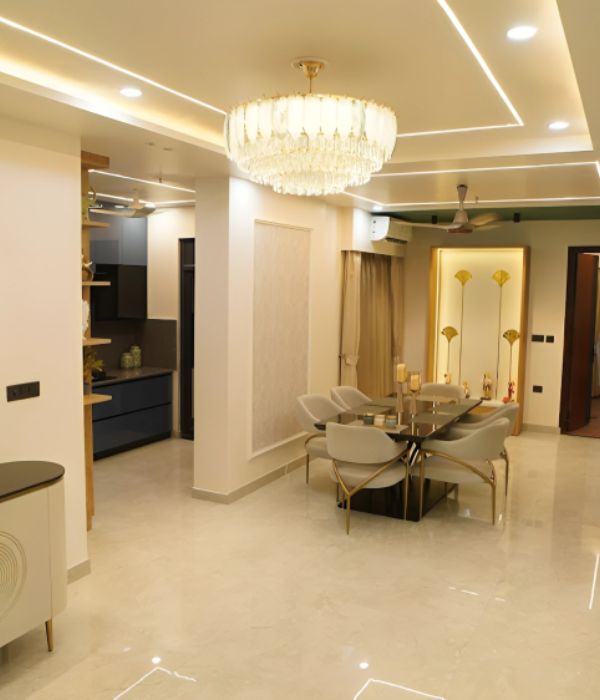
The Psychology of Luxury Homes: Why Environment Influences Quality of Life Here’s a number worth sitting with most people, especially as they get older, spend somewherearound 90 percent of their time at home. Not at the office, not on holiday, not out with friends —home. And yet when people shop for a house, they usually spend more time deciding on thetiles than actually asking what that space will do to their state of mind, day after day, for years. Environmental Psychology of Luxury Homes have been studying that gap for a long time, and what they’vefound is fairly consistent: your home isn’t a neutral container for your life. It’s an activeparticipant in how you feel. The Home Is Doing More Than You Think There’s a useful framework in this field, developed by researchers Bonaiuto, Fornara, andBonnes, that breaks residential satisfaction into four categories — architectural and planningfeatures, social features, functional features, and contextual features. The point of theframework isn’t the categories themselves; it’s the underlying insight. You can love yourapartment’s layout and still feel drained by traffic noise outside. You can appreciate a nearbypark and still feel disconnected because you never see your neighbors. Quality of life at homeisn’t one score. It’s several different, sometimes conflicting, experiences stacked on top of eachother. That’s a more honest way to think about “lifestyle oriented residence luxury” than the usual checklist. A home can haveexpensive fittings and still fail on half of these dimensions. What Actually Moves the Needle Some of the clearest findings in this research area are almost disappointingly simple. Naturallight. Spatial layout that doesn’t feel cramped or awkward. A view of greenery or open skyinstead of a wall. These consistently show up as predictors of what researchers call “restorativeexperience” — the sense that a space actually helps you recover from a stressful day ratherthan adding to it. Access to windows with a green or open view has specifically been linked to reduced anxietyand better mental recovery. Warm, well-proportioned rooms tend to make people feel calmeralmost independent of how expensive the furniture in them is. Clutter and poor lighting send apsychological signal, even if you don’t consciously register it — and so does their opposite.None of this requires marble. It requires deliberate design. Luxury Isn’t What You’d Assume This is where a lot of luxury housing gets it backwards. Historically, the word “luxury” in realestate has been used to describe finishes — the quality of the marble, the brand of the fittings,the size of the chandelier. But the psychological research on residential satisfaction pointssomewhere else entirely: toward light, air, layout, privacy, and green access. Interestingly, oneHong Kong quality-of-life study found that higher-income groups specifically cared more aboutarchitectural quality than lower-income groups did, once basic needs like location and privacywere met — suggesting that as people can afford to be pickier, their priorities shift towardexactly these psychological, experience-based factors rather than surface-level ones. In other words, the buyers who can afford the most choice are often the ones gravitating towardhomes that get the fundamentals right, not just the ones that look expensive in a photograph. Why This Matters More Now Than It Used To The pandemic accelerated something in how people evaluate their homes, and it hasn’t reallyreversed since. When millions of people were suddenly confined to their own four walls formonths, the psychological impact of a bad layout, no natural light, or nowhere green to look atbecame impossible to ignore. Researchers studying home environments have noted a renewed,sustained interest in understanding how housing shapes mental and emotional wellbeing — notas an abstract academic question, but as something people had just lived through directly. That shift in awareness hasn’t faded. If anything, it’s raised the baseline expectation. Buyerstoday are more likely to ask whether a home will actually support their day-to-day mental state,not just whether it looks impressive when guests visit. Applying This to How You Actually Choose a Home If the psychology research holds up — and it consistently has, across different countries anddifferent housing contexts — then the practical takeaway for anyone house-hunting is to weightthe fundamentals more heavily than the finishes. How much daylight does each room actuallyget through the day? Is there a genuine view, or does every window face a wall? Is the layoutzoned sensibly, or does it just cram rooms into a footprint? Is there real green space nearby, notjust a landscaped entrance for photographs? Addela Palm Resort in Raj Nagar Extension has been designed with several of thesepsychological fundamentals built in from the start — low-density layouts, generous natural lightand ventilation, and landscaped open spaces positioned to be part of daily life rather than adecorative afterthought. For anyone weighing how much environment genuinely shapes qualityof life . The Real Definition of a Good Home The research is fairly unambiguous on this point: your home shapes your mental state far morethan most people account for when they’re buying one. True luxury, seen through that lens, isn’tthe most expensive finish you can afford — it’s an environment engineered, deliberately, tosupport how you actually feel while you’re living in it, every single day, for years.
How the Upcoming RRTS Corridor Will Transform Real Estate in Ghaziabad
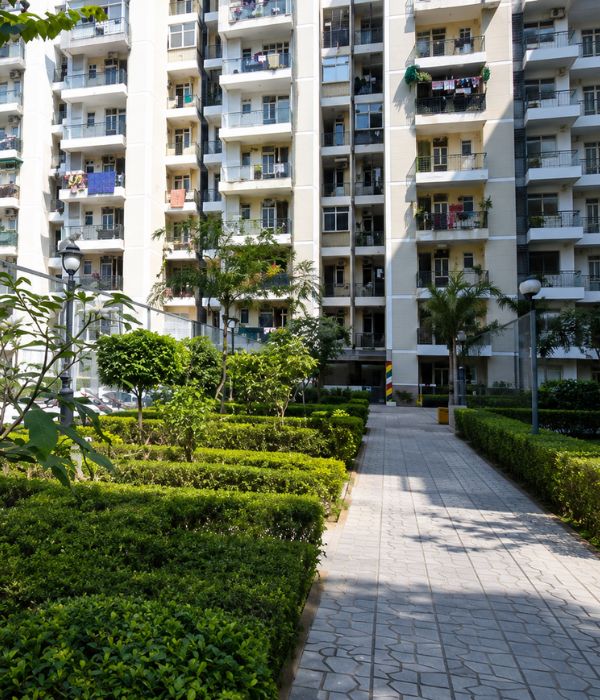
How the Upcoming RRTS Corridor Will Transform Real Estate in Ghaziabad There’s a particular kind of shift that happens in a city when a commute stops being a dailynegotiation and starts being a non-issue. Ghaziabad is going through that shift right now, andthe reason has a name most locals have already started using in everyday conversation —Namo Bharat, the upcoming RRTS corridor. For years, Ghaziabad had a strange identity problem. It sat close enough to Delhi to beconsidered part of the NCR on paper, but far enough — in terms of actual travel time — that italways felt like a fallback rather than a first choice. You lived there because you couldn’t affordDelhi, not because you wanted to. The RRTS corridor is quietly undoing tha What Actually Changed The 82-km Delhi–Ghaziabad–Meerut RRTS corridor, running from Sarai Kale Khan toModipuram, is now fully operational, with trains covering the full stretch in under an hour atspeeds up to 160 km/h. That’s not a marginal improvement — it’s a different category ofcommute altogether. A trip that used to take two to three hours by road on a bad day now takesunder sixty minutes, reliably, regardless of traffic. That word — reliably — is doing a lot of work here. Ask any real estate agent in the area what’schanged in buyer conversations over the last year, and most will tell you the same thing: peopledon’t ask about price first anymore. They ask how far the nearest station is. Commutepredictability has quietly become the top variable in the buying decision, ahead of even squarefootage in some cases. The Numbers Are Already Showing It This isn’t a “wait and see” story anymore — the price movement has already happened inseveral pockets. Areas near RRTS stations along the corridor have seen appreciation in therange of 30 to 60 percent depending on the micro-market, and some pockets closer tointerchange points have moved even further. Raj Nagar Extension and Siddharth Vihar, bothwithin reach of RRTS stations, are frequently named among the biggest beneficiaries inGhaziabad specifically. What’s notable is that this appreciation isn’t evenly spread across the city. It’s concentrated —properties within roughly a two-kilometer radius of a station are outperforming the citywideaverage by a meaningful margin, which is a pattern that shows up almost every time a rapidtransit line goes live anywhere in the world. Ghaziabad is simply following a script that’s playedout before, just at a faster pace than usual because the corridor connects directly into Delhi’score. Why This Is Different From a Metro Line It’s worth being clear about what RRTS actually is, because people sometimes lump it in with aregular metro extension and undersell what it means. RRTS trains run faster than city metros,cover much longer distances, and are built specifically to connect regional hubs rather than justmove people within a single city. That’s the whole point of the “regional” in Regional RapidTransit System. Practically, what that means for Ghaziabad is that it’s no longer competing only as a cheaperalternative to Delhi. It’s positioning itself as a genuine node in a wider network — one thateventually links toward Meerut on one side and, through connecting corridors, toward placeslike Jewar Airport on the other. Ghaziabad’s Master Plan 2031 has also been updated to allowdenser development around these transit corridors, which tells you the city’s own planners arebetting on the same trend everyone else is. Who Should Be Paying Attention If you’re an end-user working in Delhi or Noida, the calculation has changed. You can nowrealistically live in a larger, newer home in Ghaziabad and still get to work in roughly the time itused to take from parts of East Delhi. That trade-off barely existed five years ago. If you’re an investor, the more interesting angle is that this appreciation cycle is still active, notfinished. Analysts tracking the corridor have pointed out that price movement will keepdepending on how new supply enters the market and how well individual projects are positionedrelative to station access — which means location within Ghaziabad still matters enormously,even as the city as a whole benefits. That’s really the filter worth applying to any project you’re considering here: how close is it,realistically, to the corridor’s actual impact zone. Addela Palm Resort, located in Raj NagarExtension, sits in one of the localities most directly named as an RRTS beneficiary. It’sRERA-registered, with construction and registry already in progress, and it’s built with the kindof details — 11-foot floor-to-floor heights, low-density planning, multiple lifts per floor — thatmatter once the connectivity story stops being novel and just becomes daily life. The conclusion Ghaziabad isn’t becoming a Delhi suburb anymore — it’s becoming its own destination, and theRRTS is the main reason why. The corridor is fully live, the price movement in certain pockets isalready substantial, and the areas closest to stations are the ones absorbing most of that gain. For anyone weighing Ghaziabad as a place to live or invest, the honest read right now is thatthe story isn’t about to begin. It’s already underway, and the window to get in before the next legof appreciation is priced in keeps getting narrower. This article is for general information only and isn’t investment advice. Property values canmove in either direction depending on market conditions, so it’s worth doing independentresearch and speaking with a qualified advisor before making a decision.
Why Premium Homebuyers Are Choosing Lifestyle-Oriented Residences Over Conventional Apartments
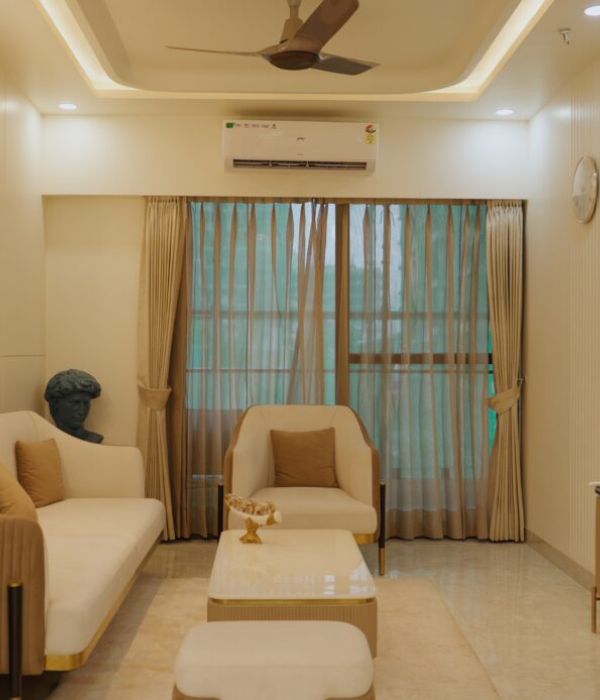
Why Premium Homebuyers Are Choosing Lifestyle-Oriented Residences Over Conventional Apartments For a long time, buying a home in India followed a fairly predictable script. You picked a locality,checked the price per square foot, counted the bedrooms, and signed. The building itself — howit was planned, what it felt like to actually live there day to day — barely factored into thedecision. That script has quietly stopped working for a growing number of premium buyers, andthe data backing that shift up is more concrete than you’d expect. Lifestyle-Oriented Residences are becoming the preferred choice for premium homebuyers who value comfort, wellness, and long-term liveability over conventional apartment layouts. The Numbers Are Blunter Than the Marketing Developers have been talking about “lifestyle living” for years, so it’s fair to be a little skepticalwhen the phrase shows up again. But the market data isn’t just marketing language dressed upas insight. JLL’s India Residential Outlook found that projects offering larger average unit sizes,lower density, and professionally managed common spaces posted absorption rates 15 to 20percent higher than city averages — even while carrying a price premium. People aren’t justsaying they want this. They’re paying more for it and buying it faster than everything else on themarket. There’s a similar pattern on the resale side. Knight Frank’s research found that luxuryapartments with lower unit density and better core-to-home ratios saw resale enquiry volumesrun 20 to 25 percent stronger than high-density luxury formats in the same micro-markets. Inplain terms: buyers are actively rewarding lifestyle-oriented planning with their wallets, not justtheir opinions in a survey. It’s Not About Indulgence — It’s About How Homes Get Used Now The instinct is to assume this shift is driven by aspiration or status-chasing. The data tells amore practical story. Average holding periods for mid-to-premium homes in major Indian metroshave stretched to 7 to 9 years, up from 4 to 5 years a decade ago. People aren’t flipping thesehomes anymore — they’re living in them, for longer, through more of their daily routine thanbefore. That changes what actually matters in a home. Hybrid work means people spend real workinghours inside their apartment, not just evenings and weekends. Multi-generational living hasbecome more common again, which puts pressure on layouts that used to assume a nuclearfamily and nothing else. A conventional apartment optimized purely for unit count per floordoesn’t flex well for any of that. A lifestyle-oriented residence — built around larger, better-zonedunits, genuine common spaces, and lower density — simply holds up better to how people areactually spending their time inside it. Buyers Are Asking Different Questions Now Walk through a premium sales conversation today and the questions have changed. It’s less“how many square feet” and more: is there real cross-ventilation, can I actually work from homewithout straining for privacy, is there a quiet corner or a green view where I can decompress forten minutes without leaving the building. These aren’t spec-sheet questions. They’re experiencequestions, and buyers ask them because they’ve usually already lived in a conventionalapartment that failed to answer them. ANAROCK’s pricing analysis backs this up in an interesting way — projects positioned aroundgenuine lifestyle and liveability only hit price resistance beyond a 12 to 15 percent premium overcomparable stock, while purely price-driven projects hit resistance at much lower thresholds.Buyers, in other words, will absorb a meaningfully higher entry cost when the trade-off is atangible difference in daily life. The calculation has stopped being EMI versus square footagealone. It now includes time saved, stress reduced, and predictability gained — harder to put ona spec sheet, but apparently very real to the people signing. What “Conventional” Actually Loses None of this means conventional apartments are badly built. Most aren’t. What they typicallylack is intentional planning around how residents actually spend their day — dense stacking tomaximize unit count, minimal shared space, layouts optimized for construction efficiency ratherthan daily comfort. That model worked fine when a home was mostly somewhere you slept andleft. It works less well now that homes have to double as offices, gathering spaces, andlong-term settings for years at a stretch. Lifestyle-oriented residences flip that priority. Lower density by design. Genuine amenity spacethat gets used rather than photographed once. Layouts planned around zoning — public andprivate spaces properly separated — rather than simply squeezing rooms into a footprint. Where This Shows Up in Practice Addela Palm Resort in Raj Nagar Extension is positioned in exactly this category —low-density planning, generous unit layouts, and shared spaces designed around daily userather than brochure photography. For buyers weighing whether the premium forlifestyle-oriented living is worth it, the market data increasingly says yes, and projects like thisare where that thesis gets tested on the ground. The Bottom Line This isn’t a passing trend dressed up in new language. It’s a measurable shift in how premiumbuyers evaluate homes, backed by absorption rates, resale demand, and holding-period datathat all point the same direction. Conventional apartments aren’t disappearing, but the segmentof buyers willing to pay more for genuinely better-planned living is growing, and the market isresponding accordingly.